Piano and electronic keyboard are different learning paths, although some foundations overlap. Start with your musical goal, then ask whether your home instrument supports the course.
Separate the course from the equipment
“Keyboard” can mean the row of keys on an instrument, a portable electronic instrument, or a particular course. That is why asking only “Do you teach keyboard?” can lead to confusion. Instead, explain what you want to do: play piano repertoire, accompany songs, or use electronic sounds and accompaniment features.
A piano lesson may use a suitable digital instrument. Conversely, owning something with black and white keys does not automatically mean it supports every piano task. Ask what the teacher intends to teach and which features your practice instrument needs.
Weighted and touch-sensitive do not mean the same thing
Weighted keys provide resistance under the fingers. Touch sensitivity changes the sound according to how you press a key. A portable keyboard can be touch-sensitive without having weighted keys. Digital pianos typically aim to reproduce piano touch and sound; portable keyboards often emphasise a range of sounds and accompaniment options. See Yamaha’s explanation of the differences.
| Feature | Question to ask |
|---|---|
| Key action | Does this instrument provide the touch needed for my piano course? |
| Touch response | Can I practise playing louder and softer through my touch? |
| Key range | Does it have enough keys for the material I will learn? |
| Pedal support | Will it support the pedal work when that becomes relevant? |
| Seating | Can the stand and seat be positioned comfortably for me? |
Use your goal to guide the conversation
If your goal is piano repertoire and expressive playing, ask for a piano pathway and discuss a suitable piano or digital piano for practice. If you want to explore accompaniment styles and electronic sounds, ask how those features would be taught and whether that pathway is currently available.
Do not let the number of built-in sounds make the decision for you. During a trial, ask the teacher to show one learning task and explain how you would repeat it at home. That practical answer is more valuable than a specification sheet alone.
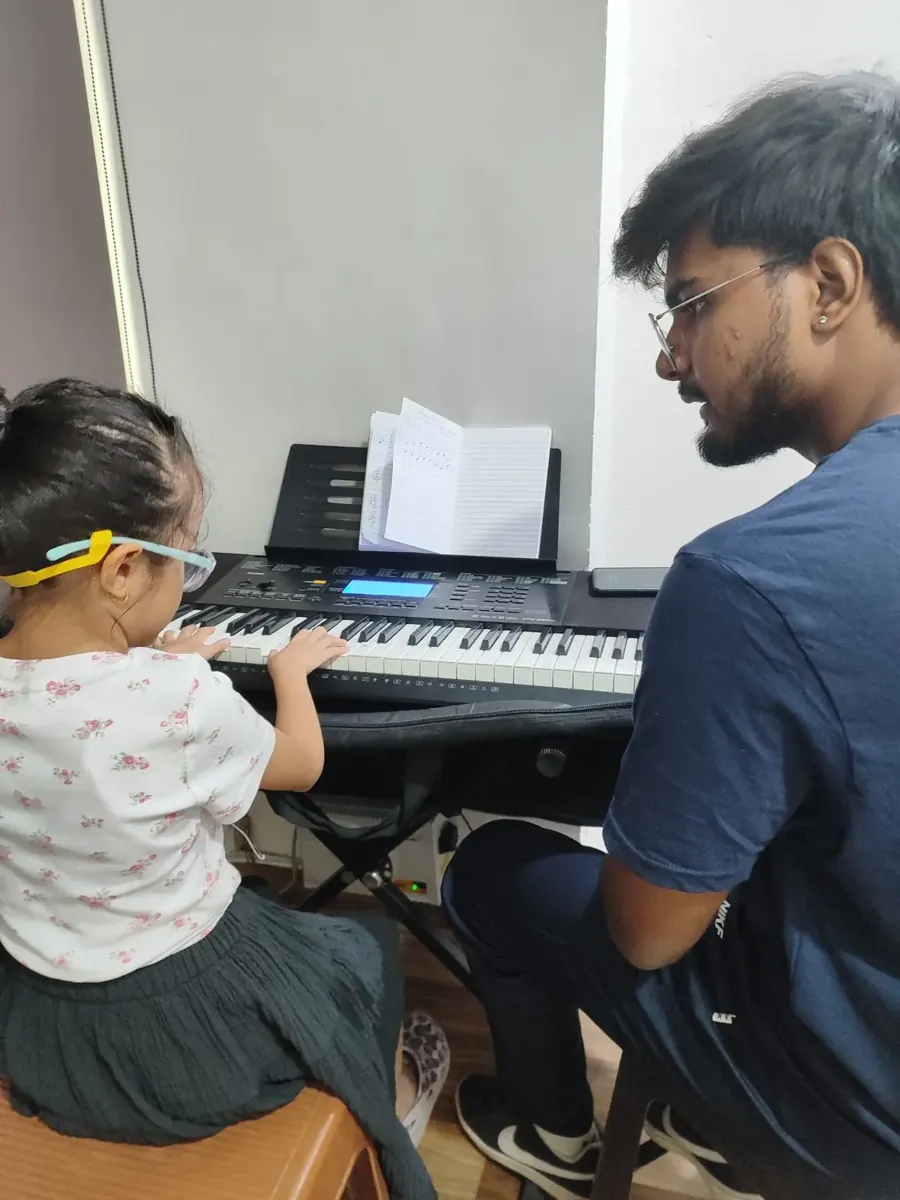
DSM’s current catalogue lists Piano. A keyboard used in a photograph is not evidence that a separate electronic-keyboard course is available. Contact admissions if that is the specific pathway you want.
Already own a keyboard? Bring its model number
You do not need to discard your instrument before speaking to a teacher. Send the model number, a photo, and any information about its touch response or pedals. Ask which early tasks it can support and which may eventually require different equipment.
A concrete plan might be to use your existing instrument for the initial activities the teacher approves, then reassess when the course demands more. That avoids both an unnecessary immediate purchase and an assumption that the current instrument will suit indefinitely.
Before buying, try a lesson-shaped test
- Tell the teacher which music you hope to play.
- Confirm the course name and the kind of home instrument it expects.
- Try a short task on the lesson instrument.
- Ask a retailer to demonstrate the relevant features on the model you are considering.
- Check the total setup, including a stand, seat, pedals and headphones where needed.
Learning and shopping are related decisions, but they do not have to happen in the same afternoon. A clearer course choice makes your buying questions much more precise.
A couple of common questions
Do I need an acoustic piano?
Ask the teacher what your course requires. A suitable digital piano may support your goals; the exact model and features matter.
Is a 61-key keyboard enough?
It depends on the material and pathway. Give your teacher the model details and ask which activities it supports and where its range or action may become limiting.
MAKE YOUR NEXT STEP CLEAR
Talk through your starting point.
Tell us what you want to learn and which branch suits you. The school will confirm the available class, current fees and a trial time.