You can start music lessons as an adult. Build the plan around a specific musical goal, a sustainable practice routine and teaching that matches your starting point—not a deadline to become impressive.
Begin with one reason that matters to you
You may have wanted lessons for years, or picked up an instrument and stopped. Neither situation requires an apology. A useful starting goal is small and personal: accompany yourself singing, play a melody you love, or keep a rhythm steadily.
Tell the teacher what you already do, even if it feels informal. Singing along, recognising a song’s rhythm, or experimenting with chords gives you something to discuss. Also explain where you feel uncertain. “I can copy a melody but lose my place” is more helpful than “I have no talent.”
Make the routine fit the week you actually have
Look at an ordinary working week, including travel and family commitments. Choose a lesson time you can protect and a few short practice opportunities you can realistically repeat. If you work irregular hours, ask about available arrangements before signing up; do not assume rescheduling is automatic.
Prepare the space so getting started is easy. Keep the instrument accessible and your teacher’s latest task close by. The aim is to reduce the number of decisions between finishing work and beginning practice.
One possible routine is a short session after dinner on several evenings, followed by a brief review before the lesson. Treat this as a planning example, not a required dose. Your teacher should help adjust the amount and activities to your level.
Expect progress to show up in smaller ways
There is no reliable universal answer to “How many months until I can play?” The song, instrument, starting point and practice all affect the work involved. A more useful question is: “What would better look like for this task?”
You might notice a steadier pulse, fewer pauses between two chords, or a phrase you can reproduce without guessing. Keep a short note of the task and what changed. If you record yourself, compare the same small passage rather than a different song each time.
Progress can be uneven. When an exercise repeatedly breaks down, take that exact problem to the next lesson. More repetitions are not always the answer; the task may need a slower pace, smaller section, or clearer explanation.
Choose online or in-person for how you learn
In-person lessons let you discuss the instrument and setup in the same room. Online lessons may fit a difficult commute, but require a usable connection and camera position. Test whether the teacher can see what your hands are doing and hear the task clearly.
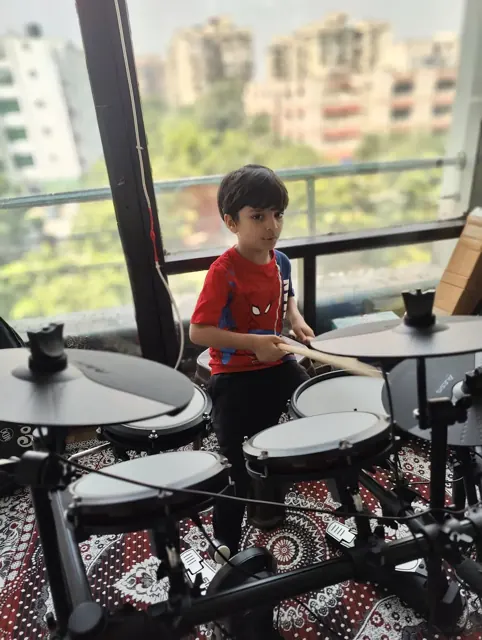
If you already own equipment, share its details before an online trial. For singing, discuss what the teacher needs to hear. For percussion, discuss what can be demonstrated with your available setup. An online option is only convenient if the lesson itself works well.
Your first conversation can be straightforward
- “I am a beginner, and I want to work towards this kind of music.”
- “These are the days I can usually attend.”
- “This is the instrument or space I have at home.”
- “What would you suggest I learn first, and how should I practise it?”
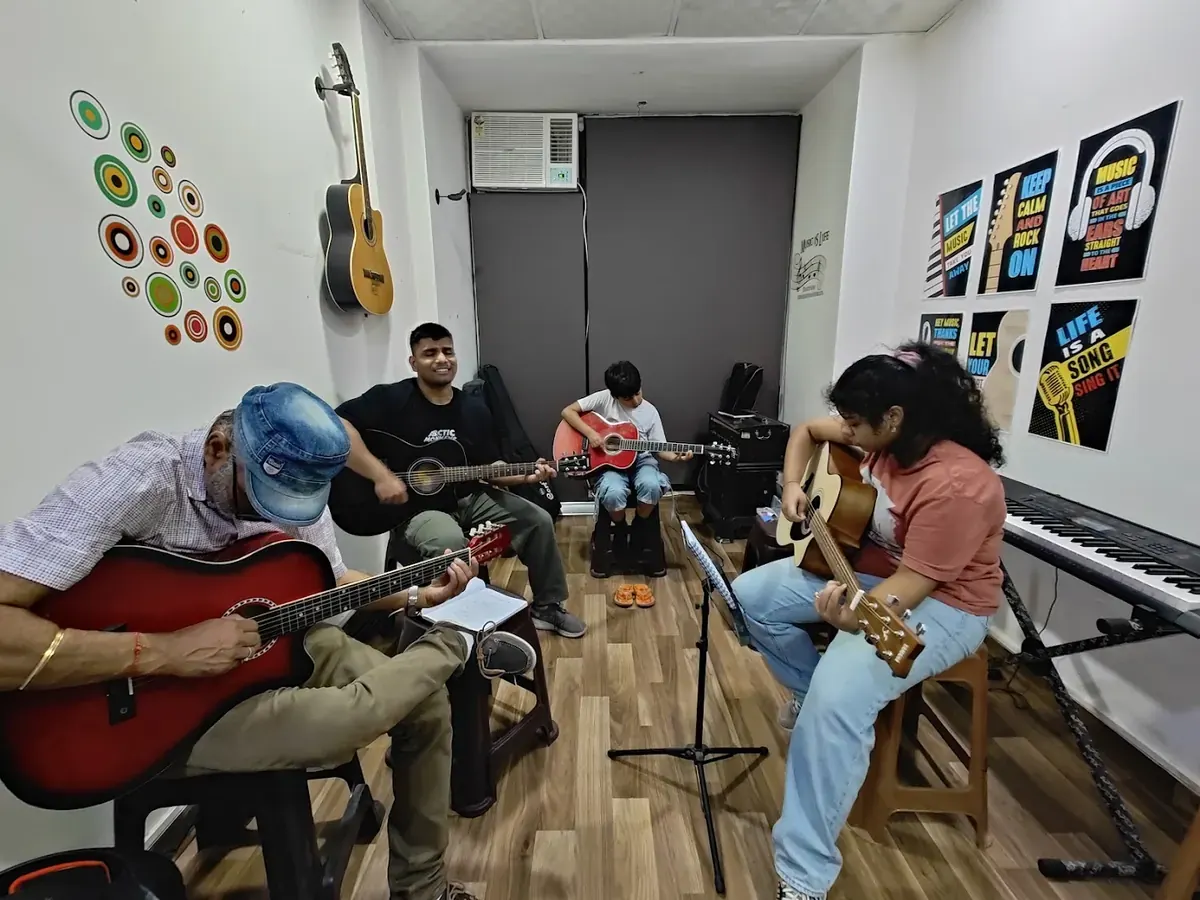
DSM welcomes children and adults. Explore the individual classes, discuss a trial at Dwarka Sector 7 or Dwarka Sector 22, or ask about online learning. The school needs to confirm the available teacher, time and current terms before you make a commitment.
You do not need a story about becoming a professional musician. Enjoying music and wanting to learn it are enough to begin the conversation.
A couple of common questions
Do I need to read music before joining?
You can discuss lessons as a complete beginner. Ask how notation, listening and practical playing will be introduced for your chosen course.
What if I tried lessons years ago?
Tell the teacher what you remember and what felt difficult. A trial can help identify an appropriate starting point instead of automatically repeating or skipping everything.
MAKE YOUR NEXT STEP CLEAR
Talk through your starting point.
Tell us what you want to learn and which branch suits you. The school will confirm the available class, current fees and a trial time.