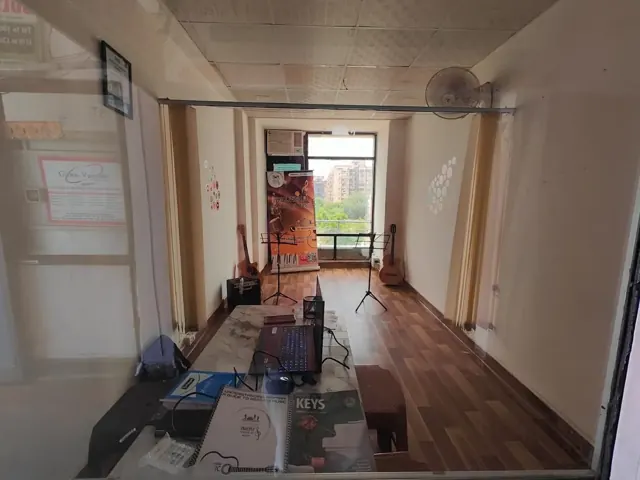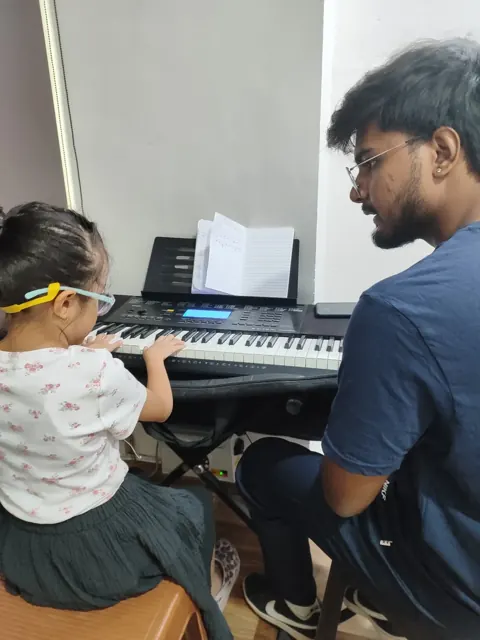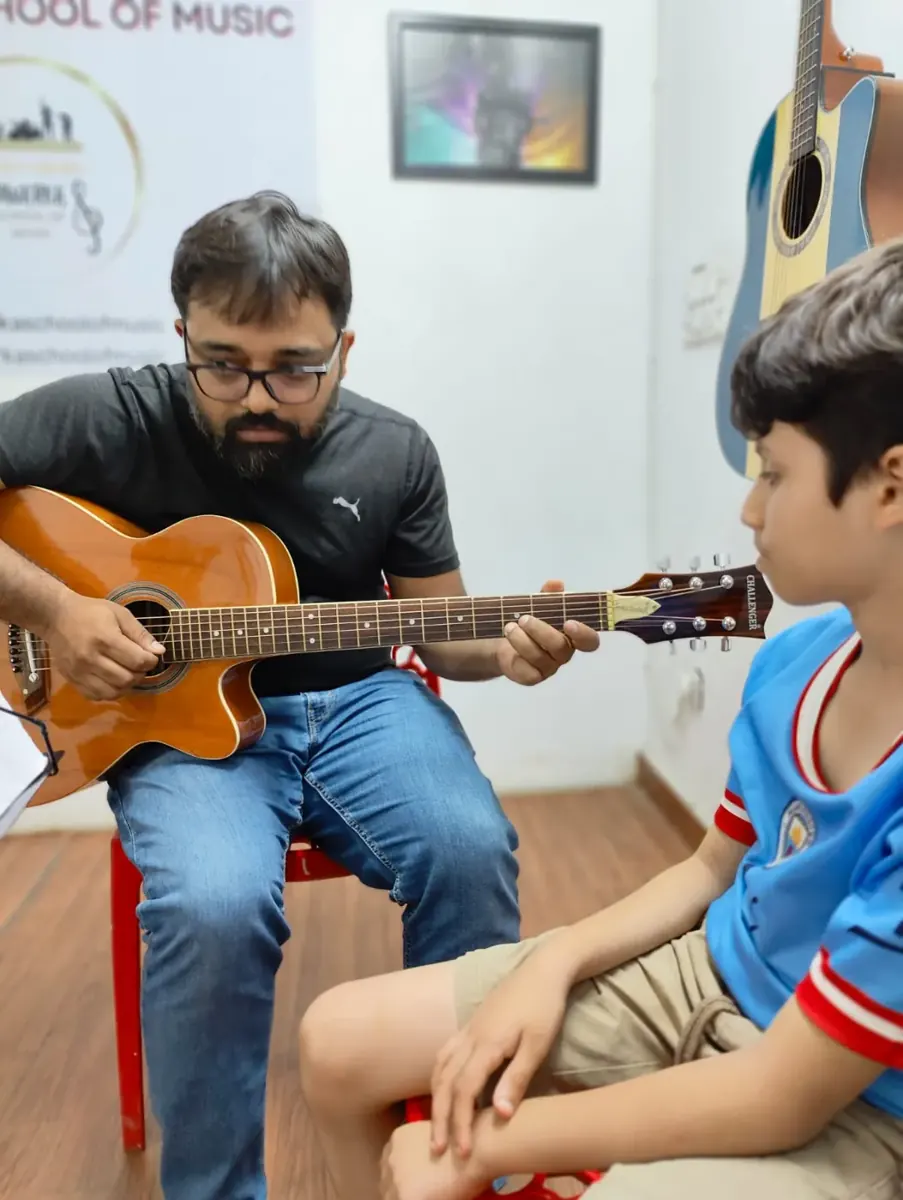
A trial is a chance to understand the learning approach and ask practical questions. You do not need to perform a finished song. Bring your goals, any equipment details and a realistic idea of your schedule.
Before you travel, confirm the appointment
A request for a trial is not the same as a confirmed booking. DSM arranges trial times manually, so wait for the school to confirm the branch, course and time before travelling. If the learner is a child, share their age when you enquire so the school can discuss an appropriate starting point.
Check the address carefully: Dwarka Sector 7 is on Ramphal Chowk Road in Palam Extension, while Dwarka Sector 22 is at Manish Global Mall. Use the directions for the branch you have agreed to visit. Ask about the trial format and anything you should bring.
Bring useful information, not a polished performance
- Your age or the child’s age, and any previous lessons.
- One or two songs, styles or learning goals you enjoy.
- Your usual available days and preferred lesson format.
- The model or a photo of your home instrument, if you own one.
- A short list of questions about equipment, fees and attendance.
If you already play or sing, ask whether a short example would help the teacher understand your starting point. If you are completely new, say so. You do not need to learn something hurriedly just to prove that you deserve lessons.
Use one small task to understand the lesson
The exact trial activity depends on the course and learner. Ask the teacher to show you a manageable starting task and explain its purpose. The useful part is how the explanation, attempt and feedback work together.
Notice whether you can ask a question comfortably. If something is confusing, say what you are unsure about. A second explanation can tell you more about the fit than completing the exercise on the first attempt.
For a child, observe whether instructions are easy to follow and whether they remain curious about trying again. One session cannot predict years of commitment, but it can provide a much better conversation than choosing solely from photographs.
Ask about what happens outside the classroom
Find out what home practice would involve and how the teacher communicates the weekly task. If you do not own an instrument, ask what you would need and when. Do not assume lesson equipment is available for home use.
For online lessons, ask to test the setup: camera angle, sound and where the instrument will sit. Share connection or equipment limitations early. You want to understand whether the teacher can observe the activities the course requires.
Before subscribing, clarify these details
- Which teacher or batch is available for your chosen course?
- How often are lessons held, and how long is each lesson?
- What are the current fees and payment terms?
- How are missed lessons, cancellations and timetable changes handled?
- Are materials, examinations or other charges separate?
- What is the first learning goal and how will progress be discussed?
Ask the branch for current answers; this guide does not set the school’s fees or policies. It is fine to take time to compare the plan with your schedule and home setup.
After the trial, write down one thing you understood, one thing you enjoyed, and one unresolved question. Those three notes can help you make a thoughtful decision about joining. If the next step is clear, admissions can explain how to enrol and confirm the available class.
A couple of common questions
Is submitting the form a confirmed trial booking?
No. The school needs to confirm the requested time and branch before you attend.
What if I do not know which course to choose?
Explain the music you enjoy and your age or experience when you enquire. Ask admissions which course or trial would help you make the decision.
MAKE YOUR NEXT STEP CLEAR
Talk through your starting point.
Tell us what you want to learn and which branch suits you. The school will confirm the available class, current fees and a trial time.