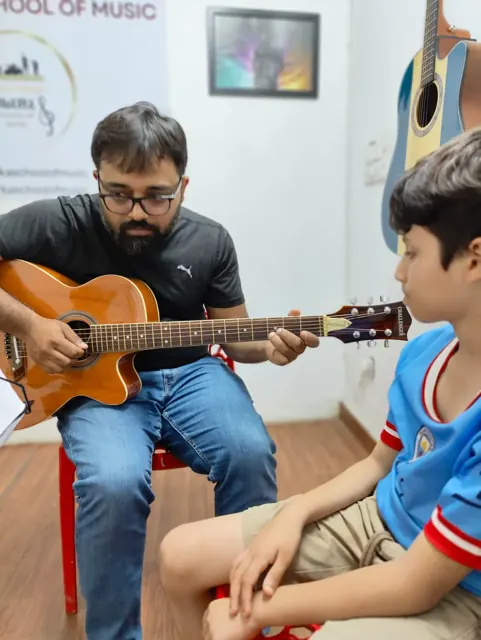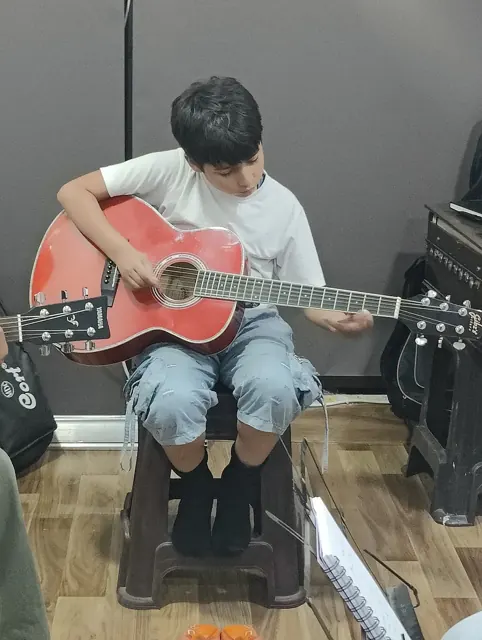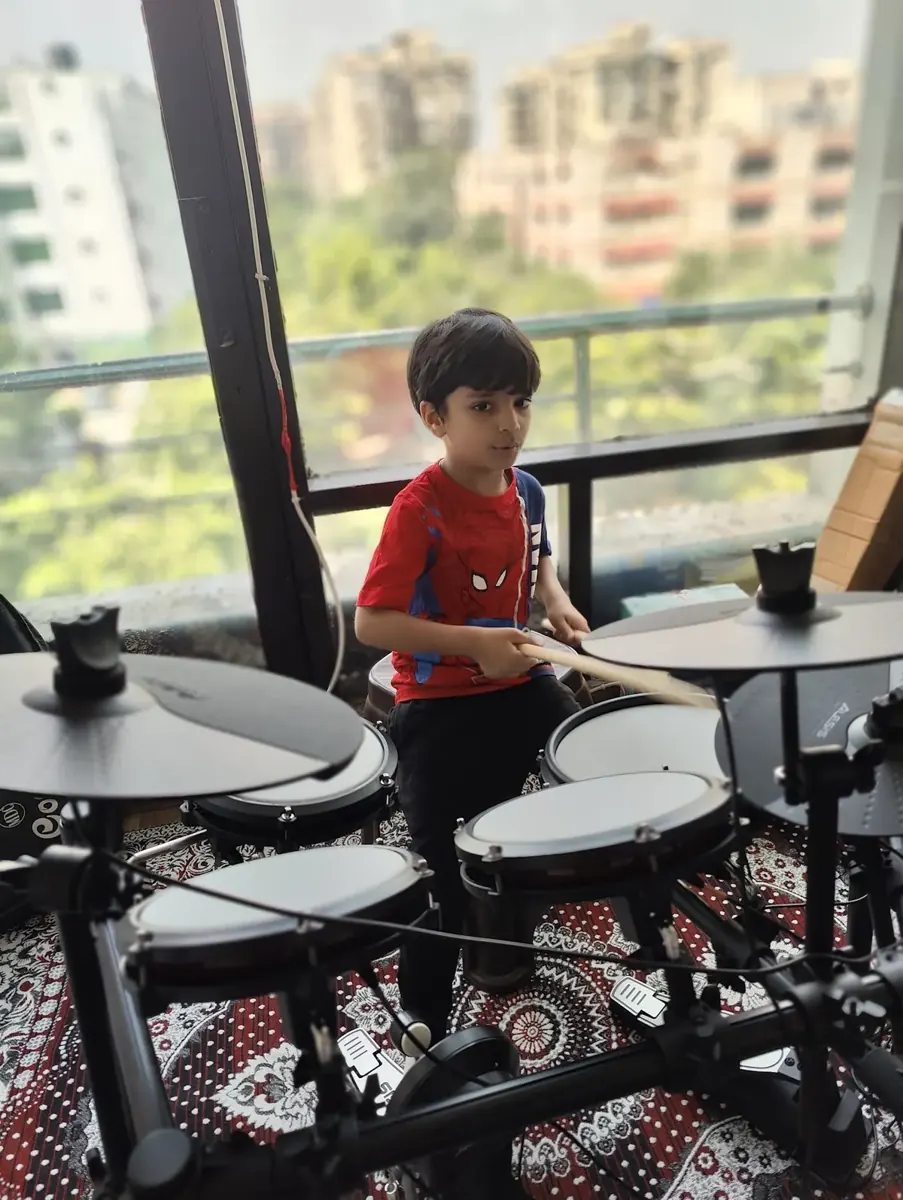
Practise the task your teacher has set, in a section small enough to understand. Know what you are trying to improve, check the result, and bring one specific question to your next lesson.
Replace a vague instruction with a clear task
“Practise guitar” is difficult to act on. “Change between these two chords while keeping this slow count” is a task you can begin. Before leaving the lesson, ask the teacher to explain what to work on, how to attempt it, and what a successful version would sound like.
If the assignment has several parts, identify the priority. You should know which part matters most this week and which part you can return to later. Write the instruction in words you understand, not only the name of the piece.
Try this adaptable short-session plan
The following is an example structure, not a fixed requirement. Choose the length and activities with your teacher; younger learners or new tasks may need a different approach.
- Settle in: prepare the instrument and recall the specific instruction.
- Work on one task: choose a small phrase, rhythm or movement and attempt it at a manageable pace.
- Check: listen for the change you were trying to make. If you cannot tell, note that question.
- Reconnect: try the small section in a little more musical context, if the teacher has shown you how.
- Finish: note what improved and what still needs explanation.
The point is to make each session informative. You want something clearer to bring back to the lesson, even if the passage is not finished yet.
When the same mistake returns, change the task
If a long passage keeps falling apart, try the smaller section your teacher recommends. If the notes work but the timing does not, ask whether to separate the rhythm from the pitches. Do not assume playing faster will make an uncertain movement easier.
Paul Harris’s ABRSM practice guidance uses clear activities and small outcomes to help learners reflect on what they have achieved. The useful idea is to give practice a purpose and a way to notice change, rather than counting repetitions alone.
Keep a record that takes less than a minute
Task: change between the two assigned chords.
Today: the first change was clearer; I paused before the second.
Question: where should my fingers move first?
Your note does not need a rating or a perfect streak. It gives the teacher a window into what happens between lessons. A short recording can also help, if you are comfortable making one and the teacher finds it useful. Use the same small task when comparing recordings.
For parents, ask the child to explain or demonstrate what they have been assigned. If the instruction is unclear, write that down for the teacher rather than inventing a new exercise. Help make time and space available without turning every attempt into a performance.
Keep enjoyment in the routine
Ask how a favourite song can connect to the skills you are learning. A song might be too advanced as a whole but still offer a rhythm, lyric or small phrase that fits the lesson. That connection can make an exercise feel less detached from why you started.
When a routine stops working, discuss the obstacle: lack of equipment, a noisy room, confusing instructions, or an unrealistic timetable. The solution should address that obstacle, rather than simply adding more minutes. For a first course, explore DSM’s music classes and ask what home practice would look like before enrolling.
A couple of common questions
How long should a beginner practise?
Ask your teacher to set an amount that suits your age, course and current tasks. Start with a routine you can repeat and adjust it as your learning develops.
Should I restart the whole song after a mistake?
Ask your teacher where to restart and how small a section to use. Repeating a long passage may leave too little attention for the actual difficulty.
MAKE YOUR NEXT STEP CLEAR
Talk through your starting point.
Tell us what you want to learn and which branch suits you. The school will confirm the available class, current fees and a trial time.