You can start on acoustic or electric guitar. Choose around your musical goal, how the instrument feels in your hands, and a home setup you will use regularly.
You do not have to “earn” an electric guitar
If electric guitar is the sound that made you want lessons, say so. Learning acoustic first is one possible route, not a compulsory stage. Either route still involves listening, timing, coordinated hands and learning how notes and chords work.
A useful trial question is: “I want to play this song eventually. Which starting exercises would help?” The answer should connect your interest to a manageable beginner task, rather than dismissing it because the song is advanced.
What actually changes between the instruments?
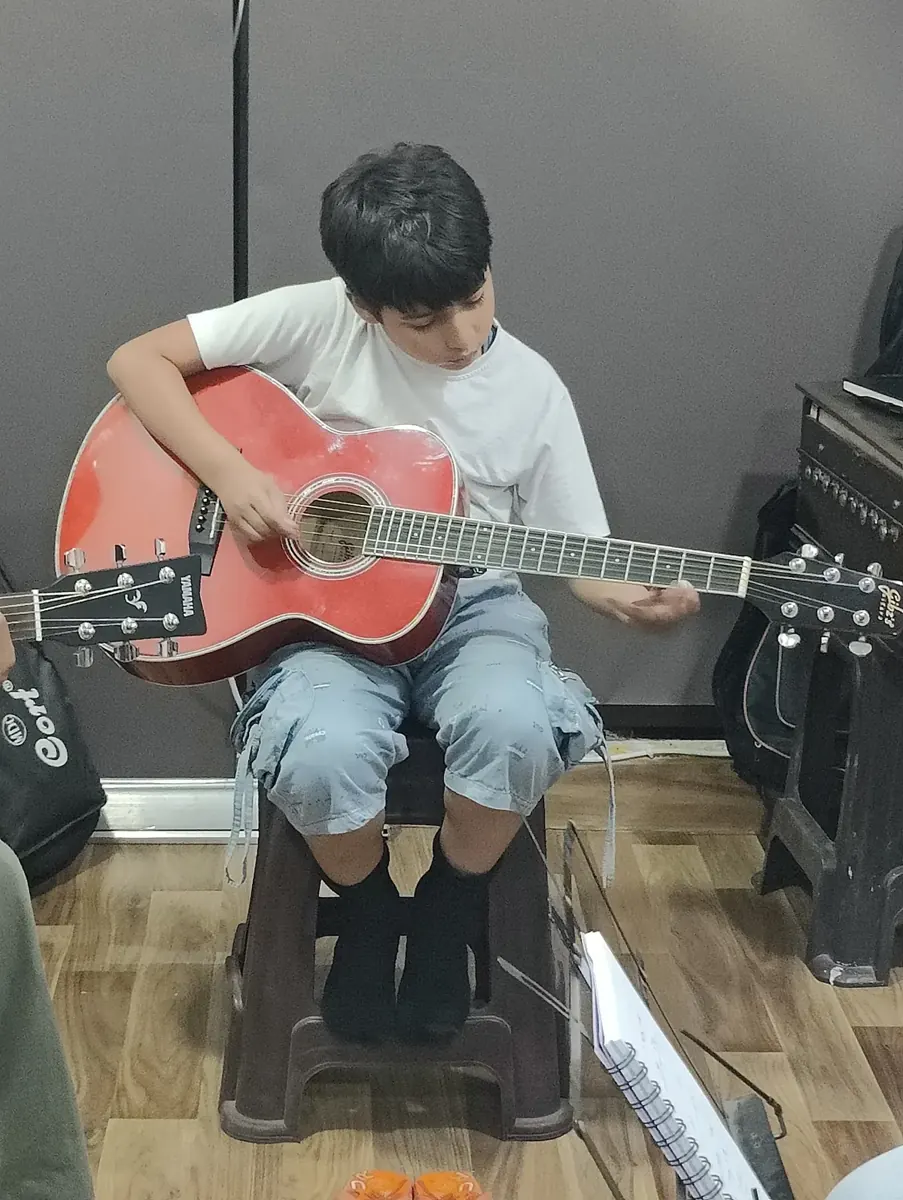
An acoustic guitar produces sound through its resonating body. Electric guitar uses pickups and amplification; an acoustic-electric is an acoustic guitar that can also be amplified. Nylon-string classical guitars and steel-string acoustics are different options, so “acoustic” does not describe only one string type. These distinctions are explained in Yamaha’s first-guitar guide.
| Question | Acoustic | Electric |
|---|---|---|
| What draws you in? | Singing with chords, unplugged playing or fingerstyle | Riffs, lead parts, bands or exploring tones |
| What should you plan? | A comfortable instrument and a place to play | An instrument plus a suitable amplifier or headphone setup |
| What should the trial test? | Comfort and an achievable first chord or melody | Comfort, a first phrase and the basic sound controls |
Comfort matters more than the label
Try the instrument sitting down. Can you hold it without repeatedly adjusting your position? Can you reach the neck comfortably? Ask the teacher to watch how you place your hands. For a child, do not choose a large instrument simply because they may grow into it.
Body size and string height affect playability. Yamaha recommends trying different sizes and consulting a qualified repairer for setup work when needed. A teacher can help you identify an uncomfortable fit before you spend money. An attractive finish or a bundled accessory pack is not a substitute for that check.
During the trial, compare a simple task on each option if available. Notice which one makes you want to try again. You do not need to play a complete song to learn something useful about the fit.
Plan for the room where you will practise
Think about who shares your space and when you can play. For electric guitar, ask a shop to demonstrate compatible headphone equipment before buying; do not assume every amplifier includes that option. For acoustic guitar, talk through when normal playing volume will be practical at home.
Make an equipment list with the teacher: instrument, protection for storage or travel, tuning solution, and any items needed for your chosen setup. Prices vary, so get a current quotation rather than treating an online article’s budget as a promise.
Choose a starting route, not a lifetime restriction
Your first instrument does not have to cover every future interest. Pick one that supports the next stage: attending lessons, practising regularly and learning music you enjoy. You can discuss another instrument later, once you know what you like about playing.
At DSM, acoustic guitar and electric guitar have their own course pages. If you are really drawn to the low part underneath the melody, explore bass guitar too. Bass is its own musical role, rather than simply another name for electric guitar.
A couple of common questions
Can a complete beginner start on electric guitar?
Yes. Discuss the music you want to play and the equipment needed for practice with the teacher.
Which one is easier?
There is no universal answer. Try the instrument, check its fit and setup, and compare a simple beginner task rather than relying on the label alone.
MAKE YOUR NEXT STEP CLEAR
Talk through your starting point.
Tell us what you want to learn and which branch suits you. The school will confirm the available class, current fees and a trial time.