You can begin some parts of drum learning without owning a full kit, especially counting, listening and teacher-guided stick exercises. A practice pad is useful, but it does not replace time on a kit for movement, sound and hands-and-feet coordination. Agree a home-practice plan before enrolling or buying.
Separate owning a kit from having access to one
“Do I need to buy drums before the first lesson?” and “Will I need to play on a kit?” are different questions. You may be able to start before making a large purchase, while still needing suitable instrument access as your lessons develop. The useful conversation is about how your lesson activities and home practice will connect.
Explain your actual situation: a shared room, an apartment, a restricted budget, or uncertainty about the instrument. Ask the teacher which starting tasks you can repeat at home, and which require the lesson kit. Do not assume a school provides unsupervised practice time, rentals or an instrument to take home. Confirm those arrangements separately.
Before joining drum classes at DSM, discuss the branch, available lesson equipment and a realistic practice setup. The aim is a workable starting plan, not a purchase made under pressure.
What a practice pad can—and cannot—do
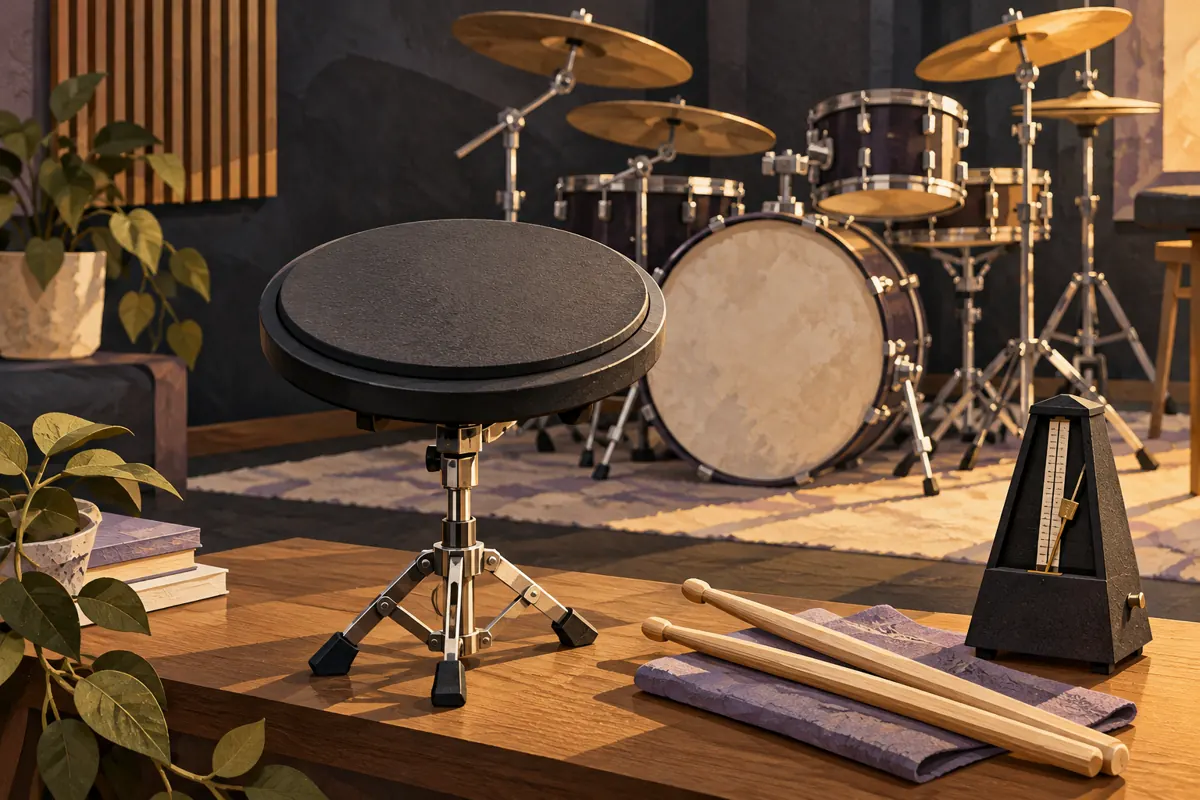
A pad gives you a compact surface for exercises such as even strokes and simple sticking patterns. Yamaha’s quieter-practice guide describes pads as useful for rudiments and stick control, with surfaces that can respond differently from acoustic drums. Ask your teacher to help set the pad at a comfortable working height.
| Tool or activity | Useful for | What it does not replace |
|---|---|---|
| Listening and counting | Following a pulse and noticing song sections | Feedback from playing an instrument |
| Practice pad and sticks | Assigned hand patterns and consistent strokes | The kit’s different surfaces, sounds and layout |
| Metronome | Checking how a pattern fits a steady pulse | A teacher explaining why the pattern breaks down |
| Suitable drum-kit access | Moving around the kit and connecting hands and feet | Focused practice between lessons |
Think of a pad as one part of the setup. It is not a small version of every skill you will need.
Why kit time still matters
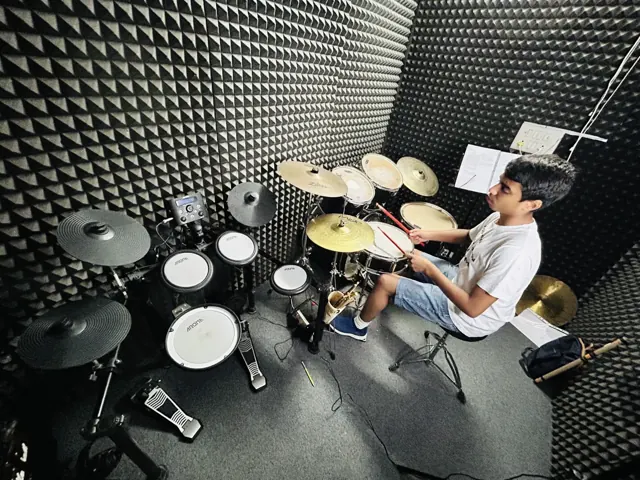
On a kit, the distance between instruments, pedal movement and the balance between sounds become part of the task. A pattern that feels settled on one surface may need attention when you move it around the kit. That is useful feedback rather than proof that pad practice was wasted.
Yamaha’s discussion of practice-pad limitations explains the importance of experiencing a real drum’s response and sound. Take your assigned pad work back to the lesson and ask how it transfers to the instrument you are learning.
A useful question is: “Which part should I prepare on the pad, and which part will we work on at the kit?” Write down the answer. Do not replace a specific lesson task with an unrelated online exercise simply because it looks impressive.
Make the plan fit your home
Before comparing equipment, choose the space and likely practice time. Who shares the room? Who is below or next to it? Where will the equipment be stored? A setup that cannot stay accessible may make a short practice session harder to start.
For an apartment in Dwarka, talk with the people sharing the home about acceptable times and listen to the setup in that room. Headphones contain an electronic kit’s reproduced sound; they do not remove the physical tapping and pedal impacts. “Electronic” should not be treated as a promise that nobody else will hear it. Yamaha includes electronic kits among lower-volume options in its practice guide.
Ask a retailer to demonstrate the exact equipment before buying. Include the stand, seat, pedals, sticks and any required audio equipment when checking the total setup. A product’s box price may not cover everything you need.
Leave each lesson with one repeatable task
Rather than collecting exercises, leave with a task you can explain in one sentence: “Play the assigned hand pattern evenly while counting aloud,” for example. The teacher should choose an appropriate pattern and pace for your level.
- UnderstandAsk for a demonstration and repeat the instructions back.
- TryWork slowly enough to notice where the pattern changes.
- ListenCheck consistency rather than chasing a higher speed.
- Bring it backTell the teacher what worked and where you lost the pulse.
This is a way to organise feedback, not a replacement for technique instruction. For broader ideas about fitting learning into your week, read our beginner practice guide.
Ask these questions before booking or buying
- What equipment will I use in the lesson, and what should I bring?
- Which home tasks are possible with the equipment I already have?
- When will I need access to pedals and a full kit layout?
- Does the branch offer any additional practice access? If so, on what terms?
- Can you check a proposed purchase before I commit?
A trial can help you understand the instrument and the teaching before choosing your next step. DSM offers one free trial per student; the school confirms availability and the final time. Read what to ask at a first trial, then discuss the drum pathway and equipment with your preferred branch.
Common questions
Can I practise only on pillows or a table?
Discuss any substitute surface with your teacher. It will not respond like a practice pad or drum, and hitting furniture is not a complete practice plan. Get a suitable surface and an agreed task before copying exercises.
Does an electronic kit solve apartment noise completely?
No. Headphones can contain the reproduced drum sound, but physical stick and pedal impacts remain. Test the actual setup and agree suitable practice times with the people affected.
Should I buy a kit before a free trial?
Speak to the branch first. Confirm the trial equipment, try the learning experience and discuss a home setup before making a purchase.
MAKE YOUR NEXT STEP CLEAR
Talk through your starting point.
Tell us what you want to learn and which branch suits you. The school will confirm the available class, current fees and a trial time.