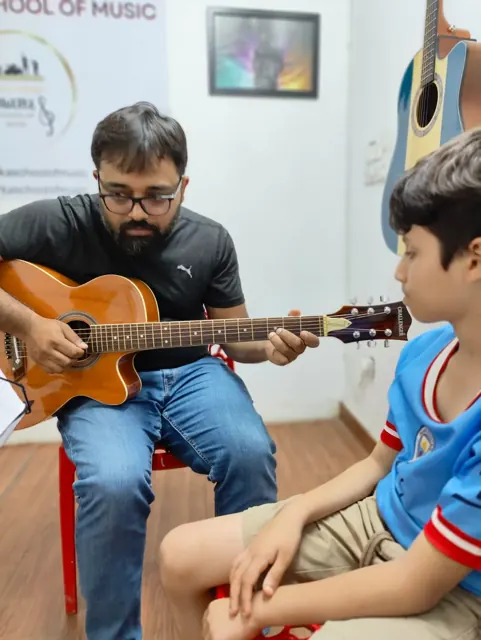
Look for a workable match between your child’s interest, the instrument, the teaching approach and the support available at home. Age alone cannot choose the right class. Use an introductory conversation or trial to explore the fit, rather than treating this checklist as a test your child must pass.
Ask which learning experience fits, rather than one perfect age
A child who enjoys singing and movement may be ready for one kind of musical experience while finding a long instrumental task unappealing. Another child may be fascinated by a particular instrument and keen to copy a short phrase. Both observations are useful; neither requires a verdict about musical talent.
The Music Teachers National Association’s parent guide distinguishes exploratory early-years music activities from instrumental programmes and emphasises the choice of teacher. That distinction matters more than assuming every music class offers the same experience.
Ask the school what it actually provides for your child’s age and starting point. Tell the DSM team which instrument or vocal course interests your child. They will discuss the teaching approach and available batch before you decide.
Notice curiosity without turning it into an audition
Listen to what attracts your child’s attention. Is it the voice, the keyboard melody, the guitar sound or the beat? Ask them to choose a favourite song, show a rhythm they enjoy or tell you which instrument they would like to try. An answer does not need to be technical.
Then notice whether they want to return to a short musical activity on another day. A child may enjoy watching a performance without wanting that instrument, so a video alone is not enough to make the choice. Likewise, being quiet with a new teacher does not mean they lack interest.
Bring these observations to the trial as questions: “They enjoy tapping the rhythm but have not tried drums. How could we explore that?” You are helping the teacher understand the child, not providing evidence that they deserve a place.
Use four questions to prepare the conversation
- InterestWhat music or instrument does the child return to willingly?
- ComfortCan the instrument and seating be adjusted for a comfortable starting task?
- Teaching fitCan the teacher explain something in a way the child can try?
- Weekly routineCan the family support attendance and an agreed practice task?
This is a conversation guide, not a readiness score. There is no requirement to give four perfect answers. A concern such as an awkward instrument size or a tiring journey may lead to a different setup, class or starting plan rather than a decision to stop music altogether.
If the choice is between string instruments, our guitar-or-ukulele guide for parents offers a more focused comparison.
Watch the teaching interaction during a trial
A useful moment is when the child tries something, encounters difficulty and receives another explanation. Does the teacher notice the difficulty? Can the task be shortened, demonstrated differently or connected to a sound the child recognises? Look for a two-way interaction rather than only an impressive demonstration by the adult.
You do not need to expect a complete song. Ask whether your child can describe or repeat one small part of the experience afterwards. They might remember a rhythm, a note pattern or simply which sound they preferred.
Discuss practical learning needs with the school in the way you find comfortable. You do not have to label your child publicly or compare them with other pupils to ask for a clearer explanation, a different starting task or a conversation about how lessons work.
Check whether the family routine can support the lessons
Try the journey at the time you would normally attend. Include school pickup, traffic, food and the trip home. A class that looks convenient on a map may be difficult in a full family timetable. Compare the actual available batch, not a hoped-for time.
At home, choose a realistic place for the instrument and ask the teacher what support is useful. The Education Authority’s music-service guidance highlights communication between teacher, parent and learner and recommends teacher-led practice expectations. That is a useful principle even when the school’s particular format is different.
One parent’s role might be helping the child remember a task or keeping the instrument accessible. You do not need to read music to ask, “What are we trying to notice today?” If the home task is unclear, ask the teacher rather than increasing the amount of practice at random.
Make a decision you can explain to your child
| What you notice | What to ask |
|---|---|
| The child likes the sound but the instrument is awkward | Can we try a different size or setup? |
| They enjoy listening but not the first task | Could we try another way of exploring the same musical idea? |
| The lesson goes well but travel is tiring | Is there another suitable batch or branch? |
| Nobody understands the home task | Can the teacher demonstrate it and explain what to notice? |
Afterwards, ask what your child enjoyed, what felt difficult and whether they want to explore it again. Discuss fees, equipment and lesson arrangements with the school before enrolling. If you decide to wait or try a different route, explain that choice without calling the child unmusical.
DSM offers one free trial per student, with the final time confirmed by the school. Use it to discuss the fit at Dwarka Sector 7 or Dwarka Sector 22. Our trial checklist helps you prepare the practical questions.
Common questions
Does my child need to show talent before starting?
You do not need to judge talent to ask about beginner lessons. Bring their interests and questions to the school, and discuss an appropriate starting activity and teaching approach.
Should I buy an instrument before deciding?
Ask the teacher first. Confirm what is available at the trial and check the fit and practice requirements before committing to equipment.
What if my child prefers another instrument after the trial?
Talk to the team before purchasing or enrolling. A trial can reveal a different interest; the school will confirm which course and batch options are available.
MAKE YOUR NEXT STEP CLEAR
Talk through your starting point.
Tell us what you want to learn and which branch suits you. The school will confirm the available class, current fees and a trial time.